
Sustainability
The wellness of our communities and the health of our natural environment go hand in hand.
To reduce healthcare's ecological footprint, we design software that helps our customers operate in more sustainable ways—such as reducing waste, decreasing greenhouse gas emissions, and providing patients with options for care that require less travel. Our campus in Verona, Wisconsin, reflects the same priorities. You can see it in the way we build offices, power buildings, source food, and design our landscaping—wherever we can, we strive to be responsible stewards of our environment.
Our Software
Healthcare organizations around the world are adapting to mitigate environmental harm—and they're using Epic to do it.
Reduce Use of Environmentally Harmful Anesthesia Gases
Organizations use point-of-care guidance in Epic to encourage clinicians’ use of an anesthetic agent that is more environmentally friendly than the alternative.
Cutting Anesthesia-Related Greenhouse Gas Emissions Through Data-Driven Stewardship
As part of its focus on sustainability and stewardship, Providence encouraged the use of a more environmentally friendly and cost-effective anesthetic agent. It has decreased its anesthesia-related greenhouse gas emissions by 78% and is saving $2.4 million annually.
Read the full story on EpicShare →
Photo: Brian Chesebro, MD, medical director for environmental stewardship in Providence’s Oregon region, fills an anesthesia machine vaporizer with sevoflurane, an agent that’s more cost effective and environmentally friendly than another popular anesthesia agent, desflurane.
Photo Credit: Providence
Photo: Brian Chesebro, MD, medical director for environmental stewardship in Providence’s Oregon region, fills an anesthesia machine vaporizer with sevoflurane, an agent that’s more cost effective and environmentally friendly than another popular anesthesia agent, desflurane.
Photo Credit: Providence
Inform Patient Care Using Environmental Data
Organizations use Epic to educate patients about sustainability and environmental risks, address asthma exacerbation, improve pediatric lead screening and management, and increase care equity. They’re also supporting patients who are experiencing food insecurity—which is likely to increase as climate change threatens food production and distribution. [1]
Using Air Pollution Data to Offer a More Complete View of Health
To educate families about health effects from pollution, Great Ormond Street Hospital for Children (GOSH) in London integrated air quality data into Epic. Clinicians review patients’ local air quality levels in the chart, helping initiate conversations between clinicians and families about the environmental drivers of health.
Read the full story on EpicShare →
Photo: GOSH hosts an annual Play Street event in honor of World Car Free Day. The road by the hospital is closed off to host a range of activities for children. Play Street is one piece of GOSH's ongoing work to support a more sustainable future.
Photo Credit: Mark Hayden
Photo: GOSH hosts an annual Play Street event in honor of World Car Free Day. The road by the hospital is closed off to host a range of activities for children. Play Street is one piece of GOSH's ongoing work to support a more sustainable future.
Photo Credit: Mark Hayden
Food as Medicine: Addressing Hunger in the Community
ProMedica, Geisinger, and Boston Medical Center are among the organizations that use Epic to screen patients for food insecurity and connect them with local food assistance organizations that can help.
Read the full story on EpicShare →
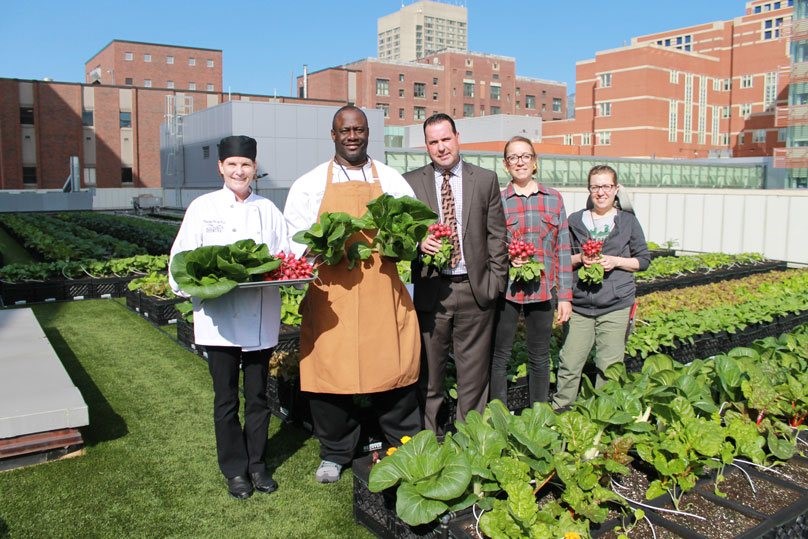
Photo: A rooftop garden harvest destined for Boston Medical Center’s cafeteria meals, Teaching Kitchen, and Preventive Food Pantry.
Photo Credit: Boston Medical Center
Photo: A rooftop garden harvest destined for Boston Medical Center’s cafeteria meals, Teaching Kitchen, and Preventive Food Pantry.
Photo Credit: Boston Medical Center
Use Telehealth to Reduce Carbon Emissions
By offering patients telehealth options through Epic, organizations can keep patients connected with their care teams while also reducing the miles they have to drive.
On-Demand Virtual Care Offers Patients Convenience and Value
At UC Davis Health, University of Mississippi Medical Center, and The Queen’s Health System, on-demand virtual visits increase convenience and access to care for patients, prevent unnecessary ED and urgent care visits, save patients time and money, and relieve overburdened urgent care clinics and doctors’ offices.
Read the full story on EpicShare →
Photo:
Photo Credit: UC Davis Health
Photo:
Photo Credit: UC Davis Health

Telemedicine reduces the carbon footprint of an appointment by between 0.70–372 kg CO2e (carbon dioxide equivalents) compared to a face-to-face visit. [2]

Reduce Paper Usage
Papermaking is an extremely resource-intensive process that has a polluting effect on water and air. [3] Organizations are using MyChart to give patients the ability to view After Visit Summaries, respond to questionnaires, sign forms, and pay bills—reducing paper usage.
Improve Patients’ Financial Experience with Convenient Digital Payment Options
Atrium Health uses text messages, email, and MyChart messages to let patients know when they have a balance due and that they can pay by text. Using real-time balance notifications also helps financially: early results suggest Atrium will receive $19 million in digital self-payments and save $182,000 in labor and paper costs per year.
Read the full story on EpicShare →
Photo:
Photo Credit:
Photo:
Photo Credit:
Develop Climate Resiliency and Prepare for Disasters
Because climate change increases the risk of natural disasters and extreme weather events such as hurricanes, wildfires, and extreme heat or cold, it's increasingly common for healthcare organizations to have climate resiliency plans in place for when disaster strikes. Epic helps by offering hosting services and business continuity guidance, surge planning for an influx of patients in the event of a natural disaster, and information on supporting patients during natural disasters or extreme temperatures.

Epic community members can check out the Promoting Sustainable Care Strategy Handbook to learn more about how to use Epic to reduce your impact on the environment, recognize environmental effects on your patients’ health, and use environmental data to drive clinical decision-making at your organization.

View the Promoting Sustainable Care Strategy Handbook →
Sustainability on Epic's Campus
One of our favorite words used to describe Epic's campus is “intentional.” From the design of our parking structures and buildings, to our sourcing of clean energy and healthy food, we strive to make thoughtful choices that prioritize long-term benefit over short-term convenience. Our founder and CEO often refers to the “fifty-year decisions” that have guided Epic's growth to date. As we grow—into our own small city, in many ways—the importance of 50-year decisions has grown, too. We continue to look for new ways to be good stewards of our natural environment, good neighbors to our community, and true to our rural roots.
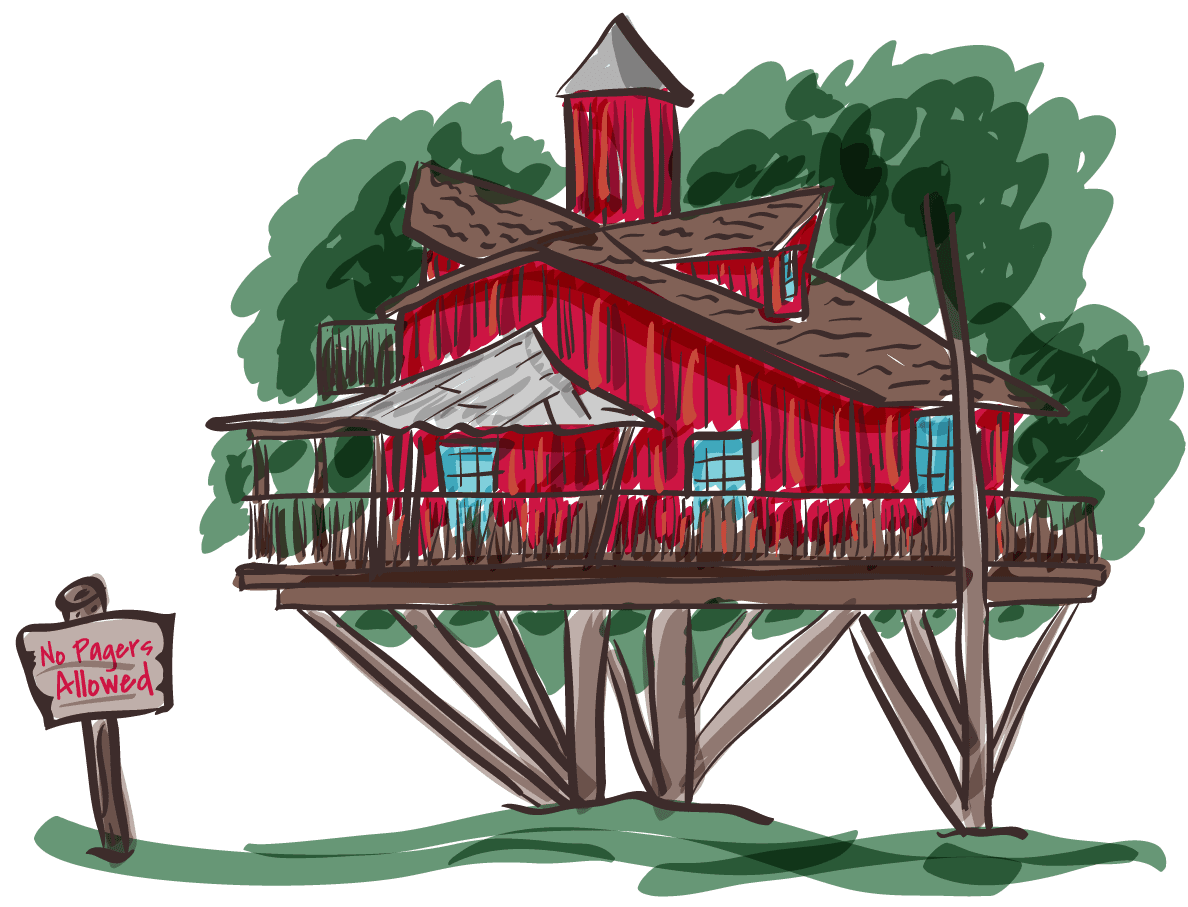
Several buildings across campus incorporate reclaimed and recycled materials—including our campus treehouse, Endor →
Parking and Transportation
Our campus uses underground parking to create more green spaces and prevent runoff into the Sugar River. Epic partners with Madison Metro to provide service to campus so bus travel is an easy option for staff, who average 15,000 rides each month. Cyclists have the benefit of on-site showers, ample bike racks—including underground racks—and connectivity to several multi-use paths and bike lanes.
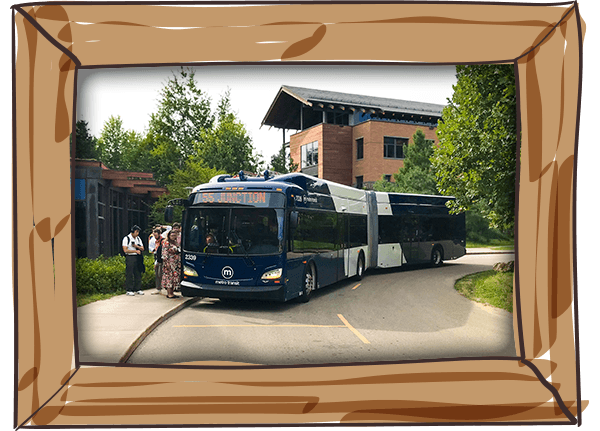
Photo: Madison's new electric buses are among the transportation options available for staff to get to campus.
Madison's new electric buses are among the transportation options available for staff to get to campus.
Buildings and Energy Use
Our 41.5 acres of green roofs mitigate the heat island effect, decrease stormwater runoff, and enhance air quality. [4] They also provide insulation, reducing energy consumption by up to 60%.
Our 27,000-ton capacity geothermal heating and cooling system is one of the largest in the world. Most campus buildings are heated and cooled year-round by this system, which requires no natural gas and uses less electricity than traditional heating and cooling systems over the course of the year. All told, geothermal heating and cooling helps each building on campus consume 64% less energy than a comparable building.
Read the report from the U.S. Office of Energy Efficiency & Renewable Energy: Geothermal Heat Pump Case Study: Epic Systems Corporation →
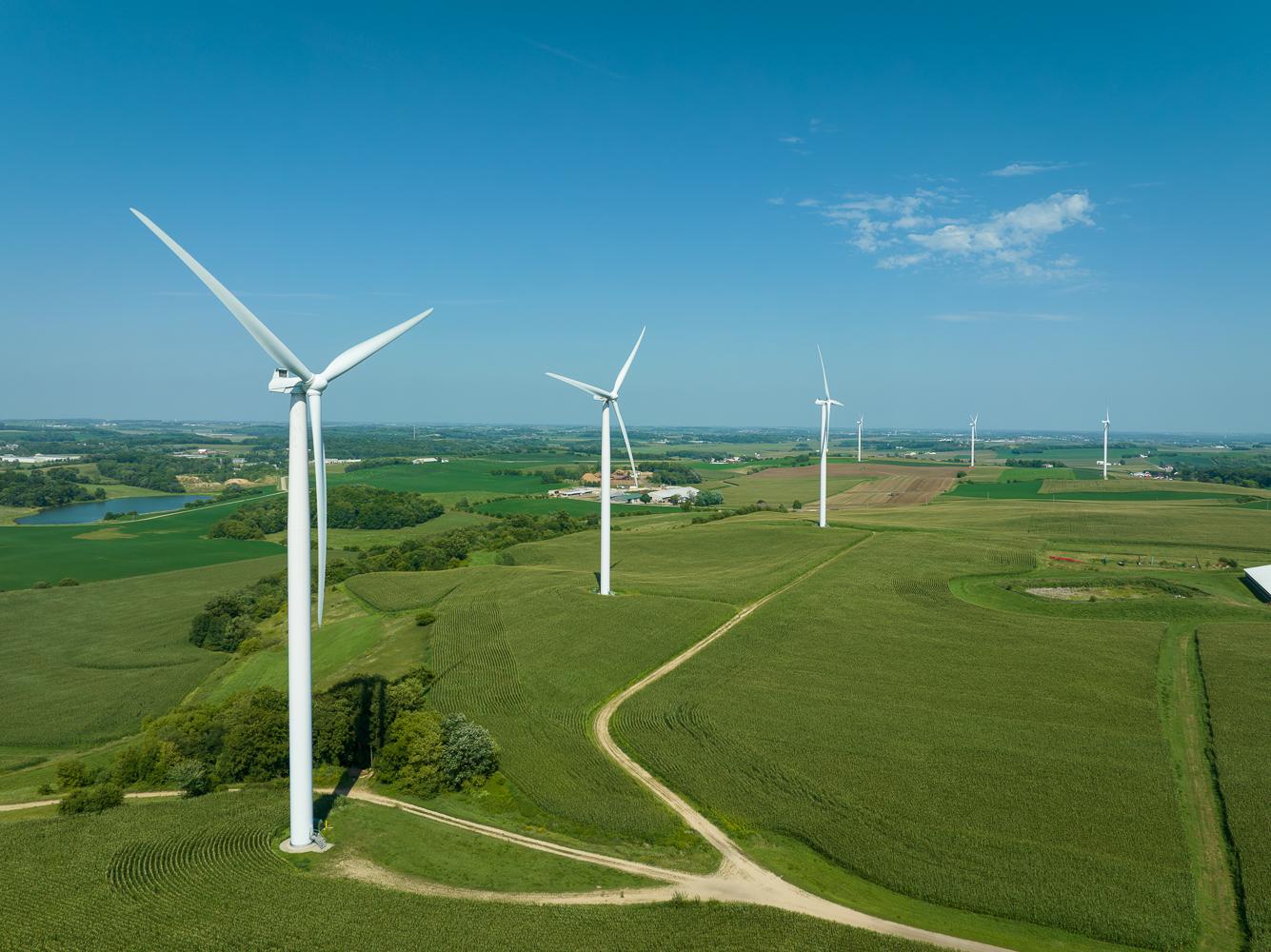
Epic's Galactic Wind Farm produces more than 20,000 megawatt hours per year—enough energy to power 2,250 homes.
Solar panels above buildings, parking lots, and a farm field produce more than 2,000 megawatt hours per year—enough energy to power 250 homes.
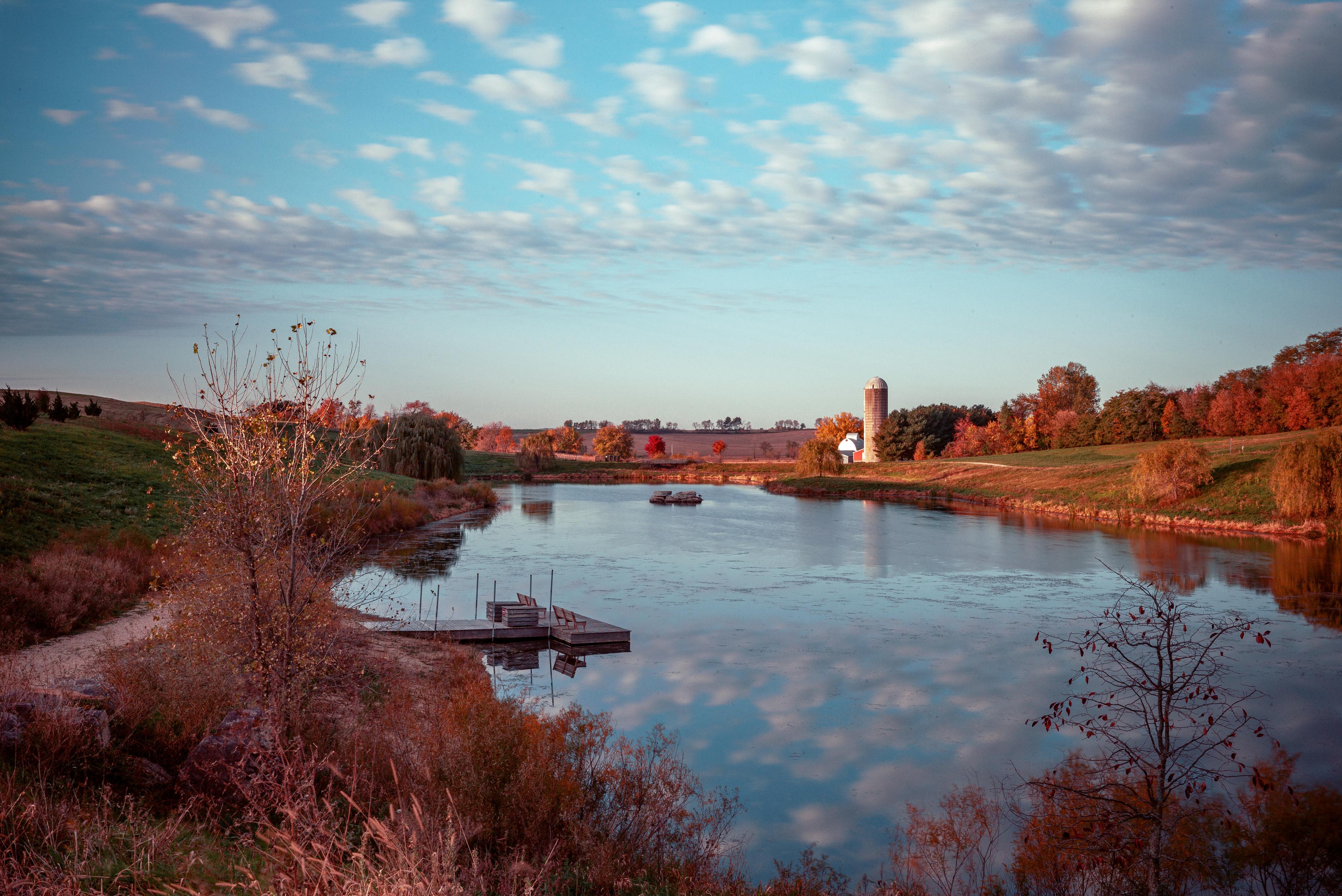
Lake Gandalf has 1,200 tons of geothermal capacity and manages stormwater runoff.
Epic's Galactic Wind Farm produces more than 20,000 megawatt hours per year—enough energy to power 2,250 homes.
Solar panels above buildings, parking lots, and a farm field produce more than 2,000 megawatt hours per year—enough energy to power 250 homes.
Lake Gandalf has 1,200 tons of geothermal capacity and manages stormwater runoff.
In 2023, Epic's renewable energy production (wind+solar) was equal to 20% of all electricity consumed on campus. We generate energy with six wind turbines and several solar arrays—enough to power more than 2,500 homes for a year.
Culinary
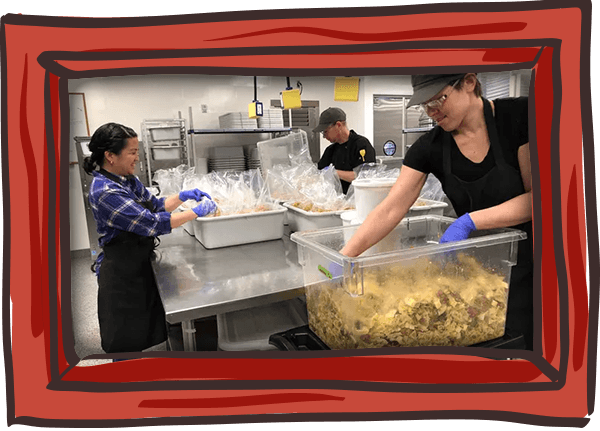
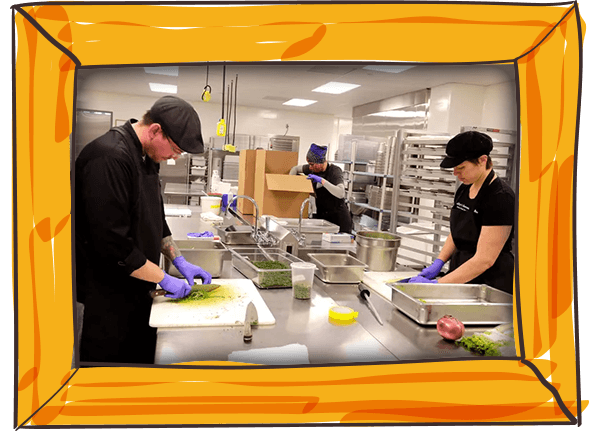
Food waste is responsible for more than half of the methane emissions that come from landfills. [5] To minimize the environmental impact of food waste, our culinary team follows the Wasted Food Scale from the Environmental Protection Agency. [6] This starts with preventing waste in the first place by preparing the right number of meals based on the number of people on campus each day. Then, in order of priority, we upcycle extra food for other uses on campus, donate it to our local community, donate pre-consumer vegetarian scraps for animal feed, and, finally, compost.
Epic’s culinary team creates seasonal menus and partners with local and regional producers and distributors to minimize food miles. Using a “radial model,” we source our ingredients from our community first, then from southern Wisconsin, and then from the Midwest—broadening our sourcing only when necessary.
We prioritize vendors with transparent supply chains and use our purchasing power to support producers committed to ethical and sustainable practices, including regenerative farming, livable employee wages, water conservation, and animal quality of life.
Our late-night food program—which feeds around 200 staff each day who work after hours—helps us use leftovers right on our campus.
In 2023, Epic donated 111,000 meals to the Badger Prairie Needs Network to reduce food waste and fight food insecurity in our community.
Since February 2024, our composting and pig feed programs have diverted more than 68,000 lbs. of food matter from landfills.
Local vendors sell produce, baked goods, meat, and more at a weekly farmer’s market at Epic in the warmer months.
Staff can sign up for Community Supported Agriculture (CSA) shares and pick up their produce at Epic. Community garden plots on campus let staff grow their own vegetables, herbs, and flowers for personal use.
Epic's culinary team packages healthy meals for the Badger Prairie Needs Network and other programs for those in need.
You can try out some of the recipes from our culinary team at home. Check out our recipe box here →
Horticulture
Ecological Diversity
More than 1,700 plant species and cultivars across campus provide a high level of ecological diversity that supports a wide range of pollinators and birds, promotes resiliency against drought and disease, and creates a space that will last for decades to come. The gardens change over time as different plants compete with or complement each other, but the overall aesthetic intent and ecological value persist.
Strategic Salt Distribution
When salt that’s used to melt ice on sidewalks and roads dissolves, it makes its way into surface water systems and into the groundwater supply. It takes only one teaspoon of salt to pollute five gallons of water to a level that’s toxic for freshwater ecosystems. [7] Since 2016, we’ve reduced salt use by 70%—even as campus has grown—while maintaining safe paths for walking and driving across campus.
Mulching Leaves
Our horticulture team used more than 700 yards of leaves in 2023 from the city of Verona to make leaf mulch to spread on our landscape beds, adding organic matter back to the soil. We take soil samples every year to help us apply only the amount of fertilizer that’s needed for each area. To further decrease the amount of fertilizer needed, we leave grass clippings in place to act as natural mulch and have animals graze on our land to reduce the use of equipment. Keeping yard waste on site—letting it decompose and spreading it underneath the solar field—eliminates the need to ship it somewhere else, decreasing fuel usage.
“We try to mimic nature in an effort to reduce the resources needed to maintain the landscape and improve ecological relationships within it. For example, our large perennial gardens use many native plants that require less water and fertilizer. We cut them back in the spring, giving pollinators the chance to overwinter in the stems, and leave the clippings in place to build soil health, prevent weeds, and reduce the need to apply mulch.”
Eric, Horticulture Team
“We care deeply about maintaining the plants on campus so they can continue to thrive for years to come. We strive to be stewards of the environment and make decisions that support the long-term success of our diverse campus.”
Rachel, Horticulture Team
Preservation
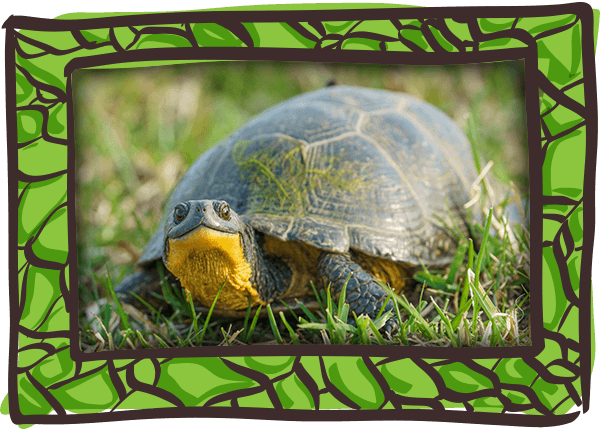
We protect valuable features on campus, including a prairie remnant—where recent prescribed burns have fostered improved diversity within the ecosystem —Native American burial mounds, historic barns, 600+ acres of farmland, 200-year-old oak trees, wetlands, and endangered species, including Blanding's Turtles and the rusty patched bumblebee.
Window decals, or “bird dots,” added to several key areas across campus have reduced bird strikes by 90%—and we continue to monitor bird strikes and add bird dots to the highest strike areas. We minimize the lights that we keep on at night, which is safer for migrating birds, and it reduces light pollution for our neighbors.
Helping Honeybees Find a New Home
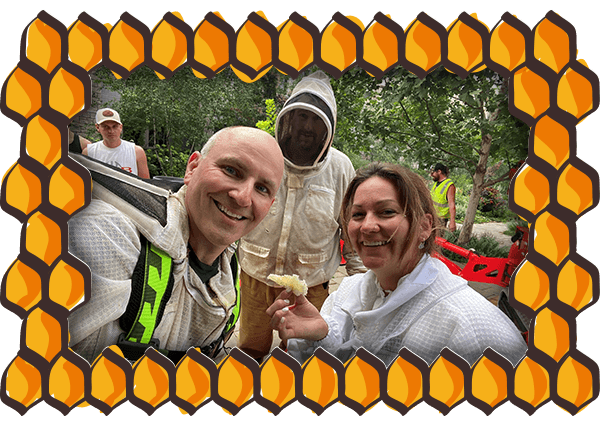
When a honeybee swarm attached itself to one of our office buildings, the horticulture team contacted business intelligence developer Patrick Norby because they knew he had experience as a beekeeper. Initially, they waited to see if the bees would move to a new home. However, after several days it became apparent that they thought this was their new home, and we needed to move them.
Patrick has made a bee vacuum for situations just like this, and this was a great opportunity to use it. Horticulture team member and lift operator Tara Caso was outfitted in a bee jacket for her protection, and another beekeeper, Matt Kersten on the interfaces team, handled the ground logistics. They were able to vacuum up the majority of the bees and rehome them to a new hive at a local organization dedicated to ecological sustainability.
“I'm very grateful to be a part of a place that puts in the effort to be mindful of our environment. This was not a small undertaking. It involved dozens of folks from facilities taking time to train me on the lift, get the equipment in place, and get the area blocked off for safety. We frequently take the hard path with our software if it's the right thing to do for our customers and their patients. We share that philosophy across all of Epic.”
Patrick, Business Intelligence Developer
Epic staff Patrick, Matt, and Tara were all part of 'Operation Honeybee' to move a swarm of bees from the side of an Epic office building to a new, safe home.
[1]

U.S. Department of Agriculture. (2015, December). Climate change, global food security, and the U.S. food system. Retrieved January 21, 2025 from https://www.usda.gov/oce/energy-and-environment/food-security 

[2]

Purohit, A., Smith, J., & Hibble, A. (2021). Does telemedicine reduce the carbon footprint of healthcare? A systematic review. Future Healthcare Journal, 8(1), e85–e91. https://doi.org/10.7861/fhj.2020-0080

[3]

World Wildlife Fund. (n.d.). Pulp and Paper. Retrieved January 21, 2025 from https://www.worldwildlife.org/industries/pulp-and-paper 

[4]
U.S. Environmental Protection Agency. (n.d.). Using green roofs to reduce heat islands. Retrieved January 21, 2025 from https://www.epa.gov/heatislands/using-green-roofs-reduce-heat-islands
[5]
U.S. Environmental Protection Agency. (2023, October). Quantifying methane emissions from landfilled food waste. Retrieved January 21, 2025 from https://www.epa.gov/land-research/quantifying-methane-emissions-landfilled-food-waste
[6]
U.S. Environmental Protection Agency. (2023, October). Wasted food scale. Retrieved January 21, 2025 from https://www.epa.gov/sustainable-management-food/wasted-food-scale
[7]

Wisconsin Salt Wise. (n.d.). Hidden costs of oversalting. Retrieved January 21, 2025 from https://www.wisaltwise.com 

Resources
Our StoryCareersContact UsEpic Community LinkGivingLegalPrivacy & SecurityTrainingEfficiencyVisiting
Events
UGMXGMEGMAPGMMajlisConnect CollaborationEuropean App ForumsOpen@Epic
Copyright © 2026 Epic Systems Corporation.
  • Software
  • Newsroom
  • Visit EpicShare
  • Visit Epic Research
  • Visit Cosmos
  • Visit MyChart
  • Visit open.epic
  • Visit UserWeb
  • Visit Showroom
  • Visit Epic.com
  • Visit EpicShare
  • Visit Epic Research
  • Visit Cosmos
  • Visit MyChart
  • Visit open.epic
  • Visit UserWeb
  • Visit Showroom
    Software
    About Us
    Our Story
    Visiting
    Epic Health System Community
    Diversity, Equity & Inclusion
    Sustainability
    Contact Us
    Newsroom